Map Guide

Navigate every corner of Hyrule across three vertical layers. This guide covers all 12 regions, 15 Skyview Towers, key landmarks, and essential navigation techniques to help you explore Tears of the Kingdom efficiently.
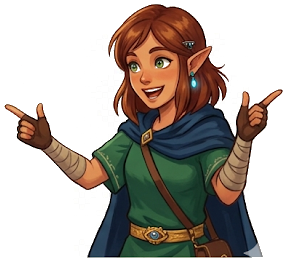

Archivist Maren — pointing and presenting
Maren

Maren

15

Regions

15

Towers

120+

Lightroots

152

Total Shrines

1000

Total Koroks

Interactive Hyrule Map

Explore Hyrule across all three vertical layers. Switch between Surface, Sky, and Depths tabs to view region boundaries. Click any Surface region to visit its detail page.

Loading interactive map...

Three Layers of Hyrule

Tears of the Kingdom expands Hyrule vertically with three interconnected layers. Each layer has its own map, fast-travel network, and unique challenges.

SKY

Sky Islands

Floating islands high above Hyrule, connected by Zonai launch pads and accessible via Skyview Towers. The Sky layer contains ancient Zonai ruins, sky shrines, Flux Construct battles, and dragon flight paths. Many Sky Islands hold unique armor pieces and Zonai device dispensers. The Great Sky Island serves as the tutorial area where Link awakens and gains all four core abilities.

Quick Tips

  • Launch from any Skyview Tower to reach nearby sky islands
  • Use Recall on falling debris to ride upward to higher platforms
  • Sky Islands often have Zonai device dispensers with unique capsules
  • Dragon flight paths cross the sky layer — land on them for rare materials

SURFACE

Surface

The familiar landmass of Hyrule featuring 12 distinct regions, villages, stables, towers, and the vast majority of quests and shrines. The Surface is the primary gameplay layer with diverse biomes ranging from volcanic Death Mountain to the frozen Hebra peaks. All major settlements, the four Regional Phenomena quests, and hundreds of side quests play out on the Surface.

Quick Tips

  • Activate all 15 Skyview Towers to reveal the complete Surface map
  • Stables serve as fast-travel points and quest hubs across every region
  • Follow roads between regions for safer travel with fewer enemies
  • Horses registered at stables can be summoned at any other stable

DEPTHS

The Depths

A massive underground cavern system mirroring the Surface map in reverse. The Depths are shrouded in complete darkness, navigated by throwing Brightbloom Seeds to create light. Lightroots scattered throughout serve as fast-travel points and dispel Gloom in their vicinity. The Depths contain Poe souls (currency for the Bargainer Statues), abandoned mines with Zonaite, and the fearsome Gloom Hands and Phantom Ganon encounters.

Quick Tips

  • Every Surface shrine has a corresponding Lightroot directly below it in the Depths
  • Brightbloom Seeds are essential — carry hundreds before descending
  • Zonaite ore is abundant in the Depths and used for Zonai device upgrades
  • Poe souls can be exchanged at Bargainer Statues for exclusive dark armor sets

Hyrule Regions

Hyrule is divided into 15 distinct regions, each with unique climate, landmarks, dangers, and rewards. Select a region for the full exploration guide.

Akkala

Temperate

The remote northeastern region of Hyrule, Akkala is characterized by its dramatic autumn-colored forests, rugged coastline, and the imposing Akkala Citadel ruins perched atop a crimson ridge. The region feels distinct from the rest of Hyrule — the rust-orange and deep-red foliage of the Akkala forests in the autumn palette gives the landscape a brooding, atmospheric quality unlike the green fields to the south. Geographically, Akkala is defined by its elevated plateaus and deep coastal cliffs dropping into the Akkala Sea. The Akkala Highlands in the south are rolling and accessible; the northeastern coast above Skull Lake becomes increasingly rugged and isolated. Tarrey Town sits on a floating island above Lake Akkala and is accessible only via bridge or paraglider — a built-up community with excellent vendors and crafting services. The cursed Thyphlo Ruins in the northwest plunge Link into perpetual magical darkness, requiring Brightbloom Seeds and careful navigation. The Lomei Labyrinth on the northeastern coast is one of the game's most complex challenge areas, with surface, sky, and Depths versions that together yield major rewards. Skull Lake to the north is shaped like a skull when viewed from above, a geographic curiosity with its own Compendium entry. Akkala is home to several of the strongest Lynel territories in the overworld — do not wander the citadel approach without preparation.

10

Shrines

75

Koroks

2

Towers

Akkala Citadel Ruins
Akkala Ancient Tech Lab
Tarrey Town (floating island)
+9 more

Gerudo Desert

Desert (Hot Day / Cold Night)

The vast Gerudo Desert dominates the southwest of Hyrule with seemingly endless tan and rust-red sand dunes, blasted rock formations, and the harsh silence of an extreme landscape. Gerudo Town is the cultural heart — a women-only desert settlement of rich Gerudo traditions, colorful textiles, and defensive architecture built on a raised plateau above the desert floor. The desert operates on a brutal temperature cycle: scorching Level 2 heat during daylight hours, then a plunge to freezing cold after sunset — meaning players need both heat and cold resistance gear to operate through a full day-night cycle. The terrain is divided by a massive perpetual sandstorm in the deep western desert that obscures navigation and inflicts damage until calmed by completing Riju's quest. Under the desert sands, a Lightning Temple is sealed. Moldugas — enormous sand-worm bosses — patrol the open dunes and can detect vibrations from foot traffic. Multiple Gibdo nests have erupted from the desert, creating pockets of these mummy-like undead creatures that are immune to physical damage and require elemental attacks. The Arbiter's Grounds ruins in the deep desert and the East Gerudo Ruins speak to a more populated history now reclaimed by sand. Kara Kara Bazaar is a small oasis trading post at the desert entrance — the last safe stop before the harsh interior.

9

Shrines

55

Koroks

1

Towers

Gerudo Town
Kara Kara Bazaar (desert oasis waypoint)
Lightning Temple (underground)
+8 more

The Depths

Varied

The Depths is an entirely separate underground world beneath all of Hyrule, one of the most significant new features introduced in Tears of the Kingdom. This vast subterranean layer is accessed via the chasms that appear across Hyrule's surface — dark circular holes that plunge hundreds of meters straight down into absolute darkness. The Depths terrain is an approximate mirror inversion of the Surface map: mountains above correspond to lowlands below, lakes above become elevated stone plateaus, and valleys become peaks. The entire Depths is shrouded in impenetrable darkness outside the radius of Lightroots — large glowing tree-like structures that serve as both light sources and fast-travel points. Lightroots are named as exact mirrors of Surface shrines: a shrine named "Oman" corresponds to a Lightroot named "Naom." Brightbloom Seeds thrown ahead serve as portable light sources, and the Miner's armor set emits personal glow for close-range visibility. The primary hazard of the Depths is Gloom — it pools on the floor, coats enemy weapons, and permanently reduces Link's maximum hearts until cured by Sundelion dishes or sunlight. The Depths contains Zonaite mineral deposits for upgrading the Energy Cell, Poe spirits for trade at Bargainer Statues, Yiga Clan hideouts with lore and supplies, and the Great Abandoned Central Mine where the Autobuild ability is found. The Construct Factory (Spirit Temple) in the far south is required for 100% completion. Depths enemies are among the strongest in the game — Frox, Stalnox, and Gloom Lynels are all found here.

0

Shrines

100

Koroks

0

Towers

Great Abandoned Central Mine (Autobuild & Energy Cell hub)
Construct Factory / Spirit Temple
Gloom Lair (beneath Hyrule Castle — Demon King)
+6 more

Sky Islands

Varied

Scattered across the skies above all of Hyrule are hundreds of floating Sky Islands — the elevated remnants of the ancient Zonai civilization's homeland that descended from a higher realm millennia ago. These islands range from single-platform stepping stones barely large enough to stand on, to massive multi-level archipelagos spanning hundreds of meters with shrines, treasure caches, Zonai device dispensers, and elaborate puzzle constructions. The sky layers of Hyrule are stratified by altitude: lower sky (reachable from Skyview Tower launches) hosts the majority of accessible islands and shrines; mid-sky connects to the Wind Temple's Rising Island Chain and the Water Temple's cloud islands; upper sky is dominated by the flight paths of the four Sacred Dragons and the Light Dragon specifically, which orbits at extreme altitude bearing a key story element. Sky Islands are broadly the most content-dense non-Surface exploration in the game — they contain roughly 32 shrines, 50 Koroks, exclusive Zonai device types (Flame Emitter dispensers, Battery dispensers), and all Sage's Wills. Traveling between island groups requires creative vehicle construction: Zonai Wing gliders with Fan propulsion, rocket-boosted platforms, or careful Skyview Tower launch trajectory planning. The Thunderhead Isles are permanently storm-wracked and require special preparation. The highest Sky Islands near the Light Dragon's flight path contain materials only found at that altitude.

26

Shrines

85

Koroks

0

Towers

Great Sky Island (tutorial archipelago)
Thunderhead Isles (permanent storm zone)
Water Temple Sky Island (above East Reservoir Lake)
+7 more

Skyview Towers

All 15 Skyview Towers across Hyrule. Each tower reveals a section of the map and launches Link into the sky for paragliding reconnaissance.

Key Landmarks

Major villages, settlements, and notable locations across Hyrule. Each landmark offers quests, services, and unique experiences.

Master the map system to explore Hyrule efficiently. These tools and techniques will help you track discoveries, plan routes, and never miss a hidden location.

Pin System

Place up to 5 map pins simultaneously to mark points of interest. Use different colored pins to categorize locations — for example, yellow for unexplored shrines, blue for material farming spots, and red for dangerous enemy camps. Pins appear as beacons in the game world, visible from great distances.

Sheikah Sensor+

Upgrade the Purah Pad sensor at the Hateno Ancient Tech Lab to track any item, enemy, or treasure chest you have photographed with the camera. The sensor pulses faster as you approach the target, making it invaluable for finding specific materials or locating the last few shrines in a region.

Fast Travel

Shrines, Skyview Towers, Lightroots, and the Travel Medallion all serve as fast-travel destinations. With 152 shrines, 15 towers, and over 100 Lightroots, the fast-travel network is dense. Place the Travel Medallion at remote locations you visit frequently but lack a nearby warp point.

Tower Launches

Skyview Towers launch Link high into the sky, providing a bird's-eye view of the surrounding terrain. Use this vantage point to spot shrines (orange glow), Korok puzzles, and points of interest before paragliding to your destination. Stamp interesting locations on the map while airborne.

Scope & Stamps

The Purah Pad scope lets you zoom in on distant terrain and place stamp markers. Use stamps liberally — they are unlimited and help track caves, treasure chests, enemy camps, and environmental puzzles spotted from afar. Combine scope usage with Tower launches for maximum map coverage.

Hero's Path Mode

Available after a certain point in the game, Hero's Path traces your movement history across the map. Use it to identify regions and areas you have not yet explored. Gaps in the green trail reveal unexplored territory where shrines, Koroks, and side quests likely remain undiscovered.

Frequently Asked Questions

How many map layers are there in Tears of the Kingdom?

There are three vertical map layers: the Sky Islands above, the Surface (main Hyrule), and the Depths below. Each layer has its own map, fast-travel network, and unique challenges. The Depths mirror the Surface map in reverse.

How do you reveal the map in TotK?

Activate all 15 Skyview Towers scattered across Hyrule to reveal the complete Surface map. Each tower launches Link into the sky for a bird's-eye survey of the region. The Depths map is revealed by activating Lightroots underground.

How does fast travel work in Tears of the Kingdom?

You can fast travel to any activated Shrine (152 total), Skyview Tower (15), Lightroot (120+), or placed Travel Medallion. Open the map, select any unlocked fast-travel point, and confirm to teleport instantly. The Travel Medallion lets you place a custom warp point anywhere.

What is the connection between Lightroots and Shrines?

Every Lightroot in the Depths corresponds to a Shrine directly above it on the Surface, with its name spelled backwards. For example, the Iayusus Lightroot corresponds to Susuyai Shrine. Use this to navigate the Depths by referencing your Surface map.

The Legend of Zelda: Tears of the Kingdom

Nintendo Switch — pick up your copy on Amazon

Buy on Amazon

Affiliate disclosure: Hyrule Archive may earn a commission from purchases made through Amazon links on this site at no extra cost to you.

© 2024-2026 Hyrule Archive — n2ai.io. All Rights Reserved.

v1.0.0-rc1 · Build #424 · trunk:bc1db15 · 3/15/2026, 10:18:07 AM

Maren

Maren